

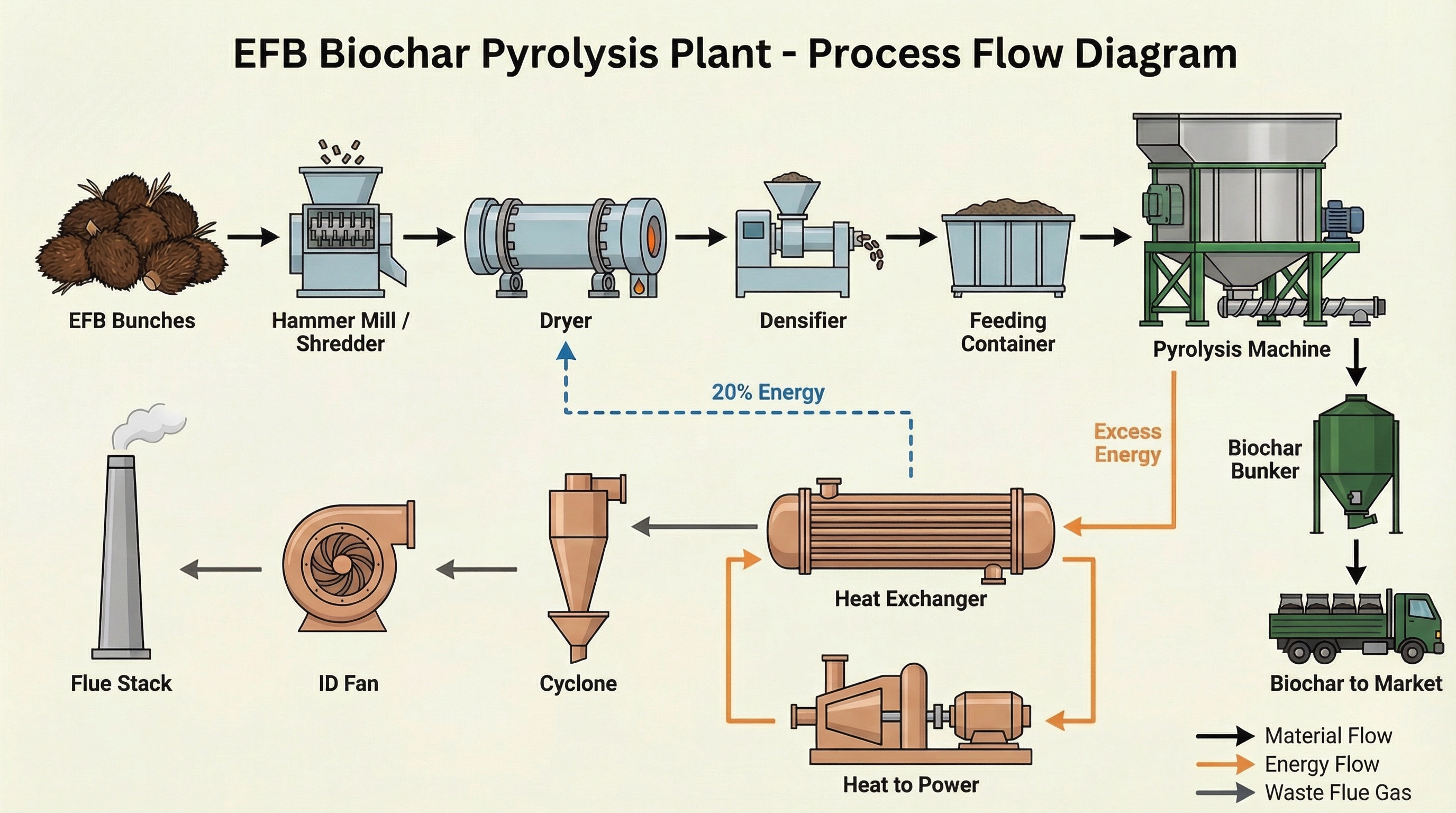
At Agrotech Bioenergy, we transform palm biomass waste into high-value, carbon-negative products through advanced pyrolysis technology.
Our solution processes Empty Fruit Bunches (EFB) and Oil Palm Trunks (OPT) into biochar, while simultaneously generating thermal energy and electrical power via an Organic Rankine Cycle (ORC) system.
This technology is already commissioned and operational at Aumkar Palm Oil Mill, demonstrating proven performance under real mill conditions.
Pyrolysis is a thermochemical process that converts biomass into biochar, gas, and heat in the absence of oxygen.
In our system:
The recovered heat is further harnessed through an ORC system to generate renewable electricity, enhancing overall plant efficiency and energy recovery.
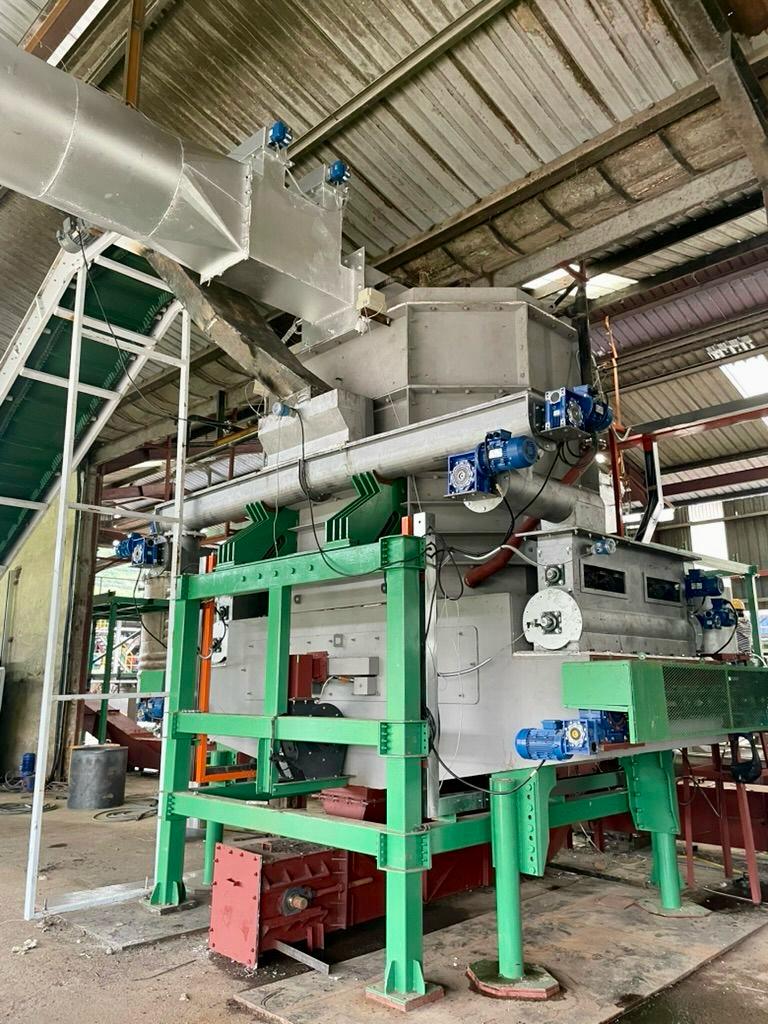
Our system is designed specifically for palm industry residues:
Abundant mill waste with high moisture content, requiring drying
Generated during replanting cycles, providing additional biomass supply
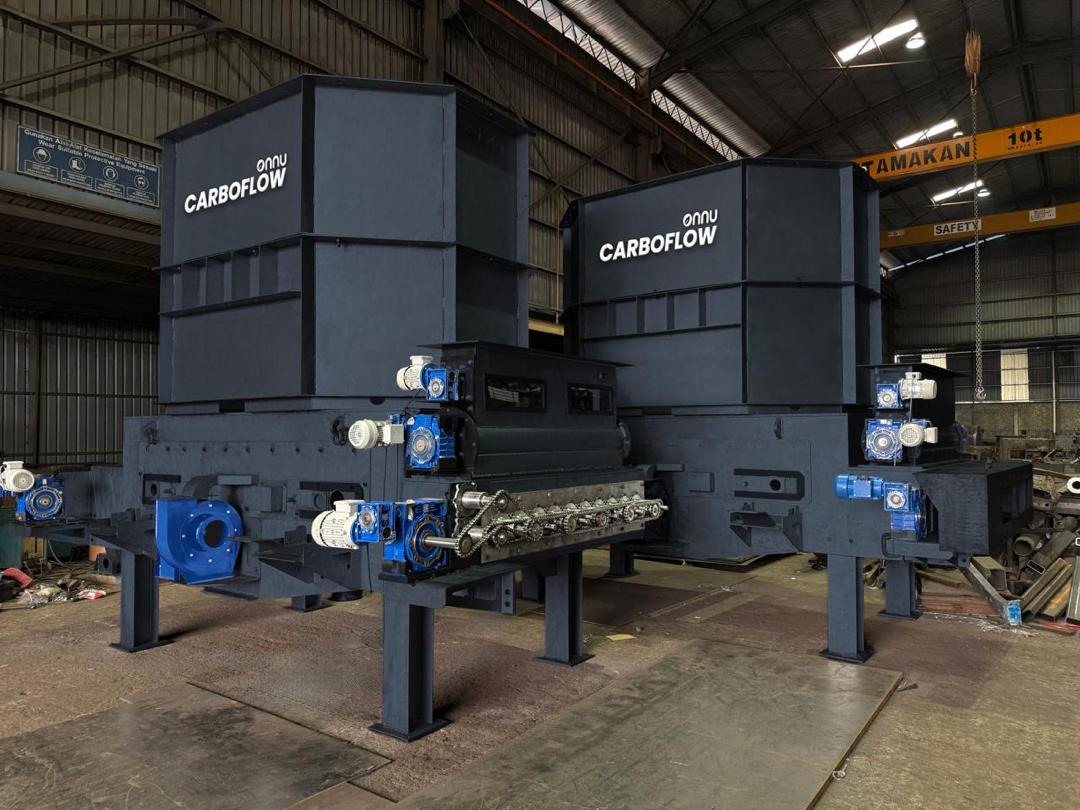
We collaborate with ONNU, a leading developer of proprietary pyrolysis systems.
Their technology enables:
Our pyrolysis solution is aligned with global carbon removal standards.
The project is registered under the Puro.earth registry, enabling the issuance of CO₂ Removal Certificates (CORCs).
This allows:
Our pyrolysis system integrates seamlessly into palm oil mill operations:
This creates a self-sustaining, circular energy system within the mill.
We offer site-specific feasibility, design, and financial modelling.
A detailed proposal, including:
can be developed upon receipt of your biomass data (EFB/OPT availability, moisture content, current handling practices, etc.).
The ONNU CarboFlow system is a slow pyrolysis technology designed specifically for fibre-based biomass such as Empty Fruit Bunches (EFB) and Oil Palm Trunks (OPT). Operating at approximately 700°C with oxygen levels below 1% inside the reactor chamber, the system converts biomass into high-quality biochar through a controlled thermal process with a solid residence time of approximately 12–15 minutes.
CarboFlow does not produce syngas for recycling into the reactor, nor does it generate usable bio-oil or wood vinegar from EFB due to the poor quality typically associated with fibre biomass.
The systemcontinuously moves biomass through heated channels. From every 1 tonne of dry EFB processed, approximately 30% is converted into biochar, while all volatile gases and vapours are fully combusted into thermal energy. This thermal energy can be utilised directly for drying processes or converted into renewable electricity through an Organic Rankine Cycle (ORC) turbine system.
For feedstock preparation, the system requires pressed and shredded EFB. The CarboFlow preprocessing system then further dries, compresses, and sizes the material prior to pyrolysis. Drying is achieved using a combination drum and belt dryer utilising recovered thermal heat from the process. Where an ORC turbine is installed, approximately 20% of the thermal energy can be converted into power, with the remaining heat used for drying.
Alternatively, direct flue gas heat at controlled temperatures can be used for drying applications.
The system is designed for operational simplicity and low manpower requirements, requiring only three operators per shift. Typical power consumption includes the pyrolysis reactor, induced draft fan, drying system, and feedstock compression and cutting systems (approximately 85kW inclusive of material pretreatment).
The technology is already operating commercially at the Aumkar Oil Mill, demonstrating its suitability for the palm oil industry and biomass applications.
We are actively deploying pyrolysis solutions across Malaysia and the region, working with mill owners, plantation groups, and strategic partners.
Follow our journey and connect with us on LinkedIn: